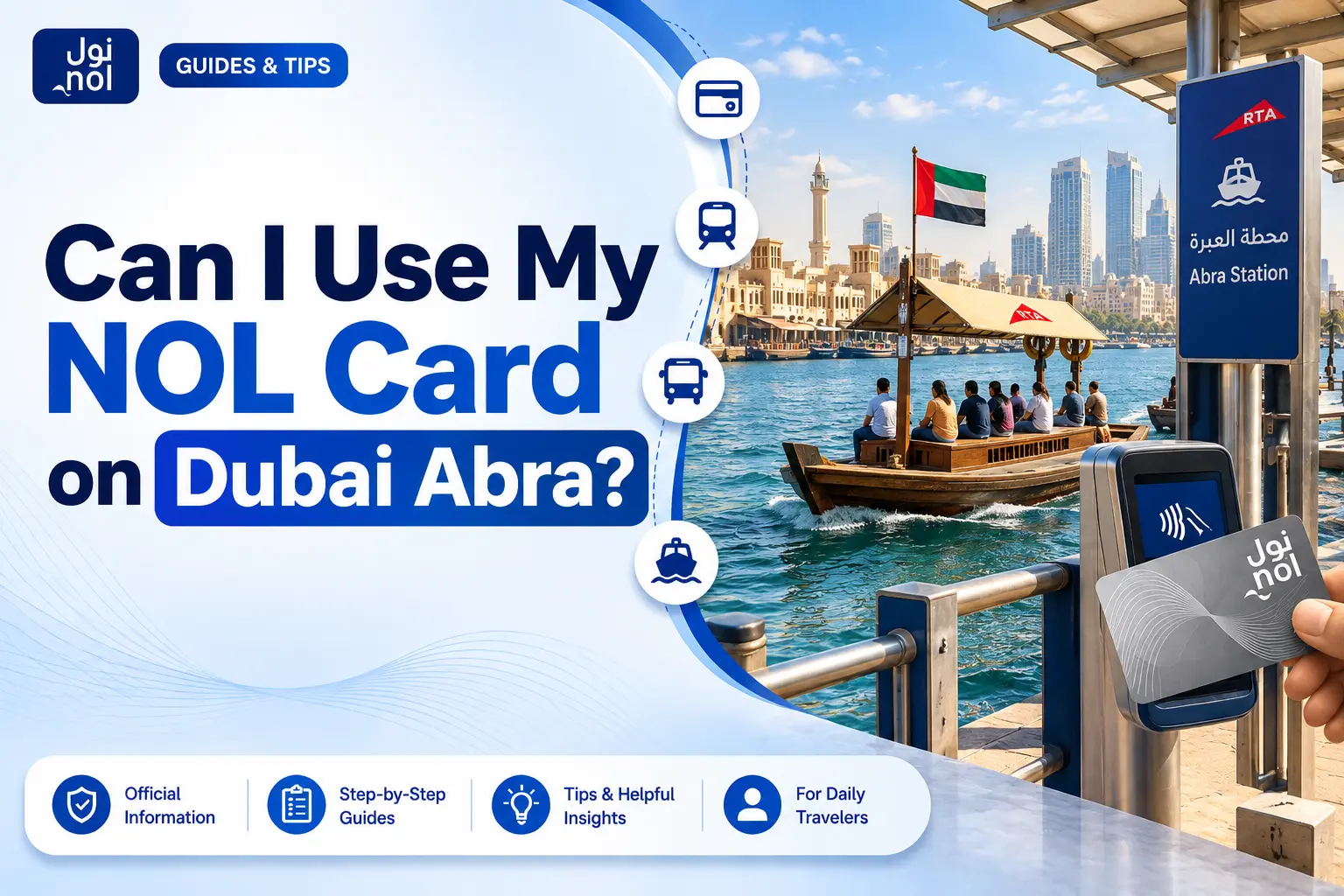
Dubai’s abras are one of the cheapest and most iconic ways to cross the Creek, but payment rules aren’t quite as uniform as on the Metro or bus. Whether your nol card on Dubai Abra actually works depends on which type of abra you’re boarding.
This article breaks down which abra services accept a nol card, which ones are cash-only, and how fares compare across the different routes.
Can You Use a NOL Card on Dubai Abra?
It depends on the type of abra. RTA officially lists Dubai Abra as one of the marine transport modes a nol card can be used for, but in practice, acceptance varies by route and vessel type.
The traditional, low-cost wooden abra crossing between Bur Dubai and Deira is generally cash-only, priced at AED 1 per passenger. RTA’s newer petrol and heritage abras, by contrast, typically accept a nol card alongside cash and debit or credit cards.
Which Abra Types Accept a NOL Card?
Dubai Creek and the Water Canal are served by more than one kind of abra, and payment methods differ between them.
Traditional Motorised Abra
This is the classic wooden boat crossing between Bur Dubai and Deira, priced at AED 1 per passenger. It’s largely a cash-based service, so it’s worth carrying a coin or small note rather than relying on your nol card here.
Petrol Heritage Abra
These modernised abras run on set routes, including several Creek crossings, priced at AED 2 per passenger. They generally accept nol card payment in addition to cash and card, following the same tap-in process used on other RTA transport.
Electrical Traditional Abra
These air-conditioned abras run tourist-oriented routes such as Dubai Mall, Burj Plaza, and Global Village, with fares ranging from around AED 52.50 to AED 75 depending on the route. Payment methods can include nol card, cash, and card, though it’s worth confirming at the specific station.
How to Use Your NOL Card on Dubai Abra Where It’s Accepted
On the abra services that do accept nol, the process mirrors other RTA marine transport.
Tapping In and Out
Tap your nol card on the reader at the station before boarding, and tap out again after your ride, so the correct fare is deducted for the trip.
Checking Before You Board
Since payment methods can vary by station and route, it’s worth checking signage at the abra station or asking staff whether nol card payment is accepted before relying on it as your only option.
Fares Across Different Dubai Abra Routes
Abra pricing varies significantly depending on which type of service you’re using.
| Abra Type | Typical Fare | Payment Accepted |
|---|---|---|
| Traditional motorised (Bur Dubai–Deira) | AED 1 | Cash generally required |
| Petrol heritage abra | AED 2 | nol card, cash, card |
| Electrical/tourist abra | AED 52.50–75 | nol card, cash, card (varies by station) |
| Private charter | AED 60–120 per hour | Cash, sometimes card |
What to Do If Your NOL Card Isn’t Accepted
If you’re heading to the traditional Bur Dubai–Deira crossing, carry small cash rather than depending on your nol card, since this route is typically not set up for card-based tap-in.
For petrol heritage or electrical abras where nol is accepted, keeping a topped-up balance means you can move between the Metro, bus, and abra without switching payment methods.
FAQs
Does the traditional Dubai abra accept a nol card?
Generally, no. The classic AED 1 wooden abra crossing between Bur Dubai and Deira is typically a cash-only service.
Which abra types accept nol card payment on Dubai Abra routes?
Petrol heritage abras and electrical tourist-oriented abras generally accept nol card payment alongside cash and card options.
How much does a traditional abra ride cost?
A traditional motorised abra crossing costs AED 1 per passenger, payable in cash.
Can I use my nol card for a private abra charter?
Private charters are usually paid in cash, and sometimes by card, rather than through a nol card tap-in.
Why do payment methods vary between abra types?
Traditional abras are an older, simpler service, while petrol and electrical abras have been modernised with card readers, which is why nol card acceptance differs between them.
What should I carry if I’m unsure whether nol works at a station?
Carrying small cash is the safest option for any abra ride, since the traditional crossing generally won’t accept a nol card even if other RTA services do.
Do concession discounts apply to abra fares paid by nol card?
Where nol card payment is accepted, Blue card concessions for students, seniors, and People of Determination typically apply the same way they do on other RTA transport.
Conclusion
Whether your nol card works on a Dubai Abra depends entirely on which type you’re boarding. The traditional AED 1 wooden crossing between Bur Dubai and Deira is generally cash-only, while petrol heritage and electrical tourist abras typically accept nol card payment alongside cash and card. Carrying small cash as a backup is the safest approach for any abra ride in Dubai.